
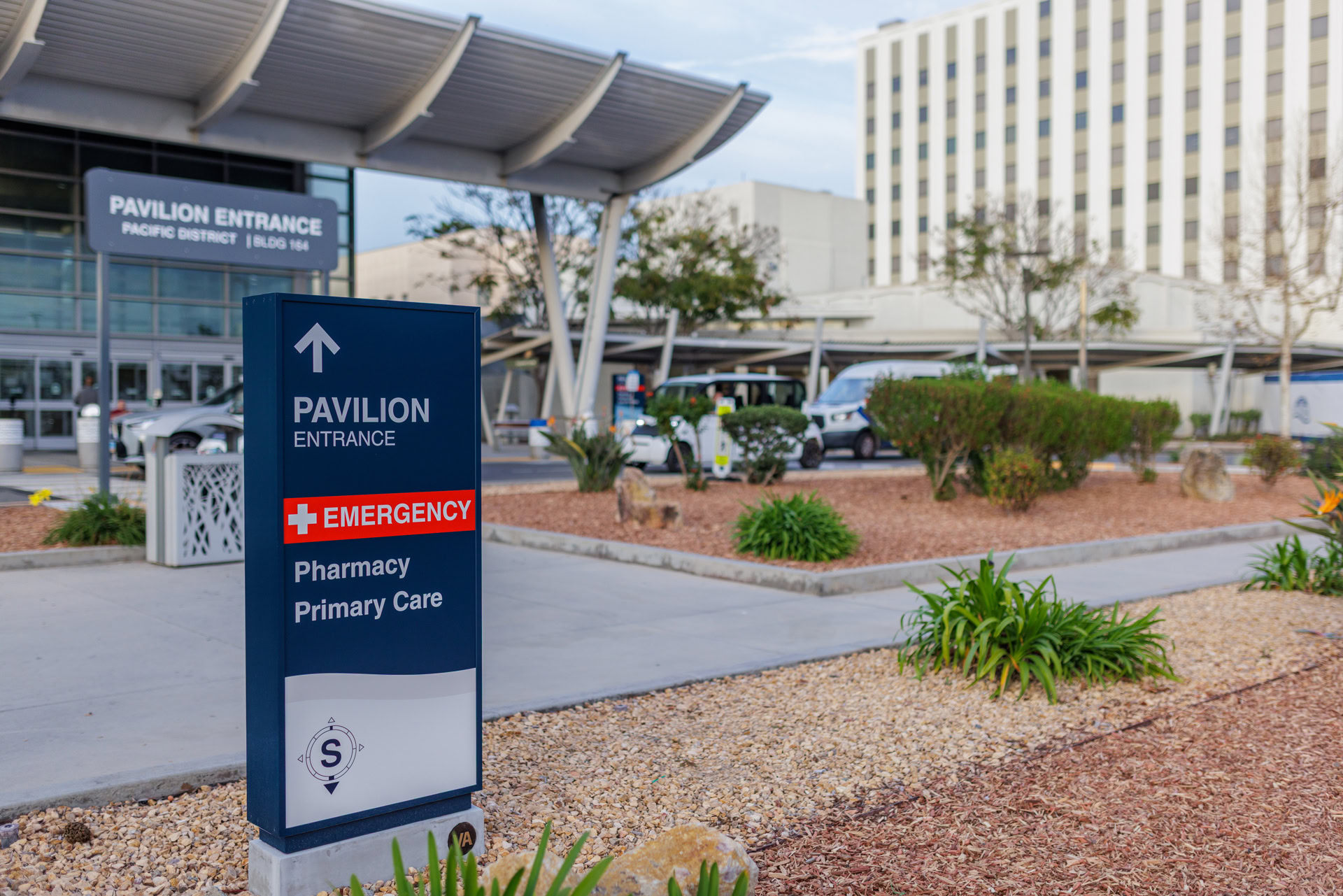
Elevating the
Arrival Experience
A field guide for VA designers and facility planners to reduce friction and improve compliance at patient arrival zones.
Why Arrival Zones Are Critical
Arrival zones are the first moment a visitor must make sense of the facility—where to enter, what to expect, and where to go next. When this zone is unclear or cluttered, confusion carries downstream into check-in flow, staff interruptions, and patient confidence.
Patient Confidence
& Reduced StressThe entrance is a high-anxiety moment. Clear, organized information builds trust, lowers uncertainty, and helps patients move forward with confidence.Compliance at the Point of Entry
Arrival zones are where required postings and entry information must be visible, current, and consistent — reducing risk of infractions and avoiding ad-hoc fixes.Staff Workload
& Front-End FlowWhen visitors can self-orient right away (hours, where to go next, what to expect), staff spend less time giving directions and correcting misunderstandings — keeping front-end flow moving.Wayfinding Performance
& Downstream FlowArrival zones set the starting point for navigation. When the first cues are unclear, confusion carries downstream — slower check-ins, missed turns, and late arrivals.
Before care even begins, the arrival zone either builds trust or creates friction.
What's Required
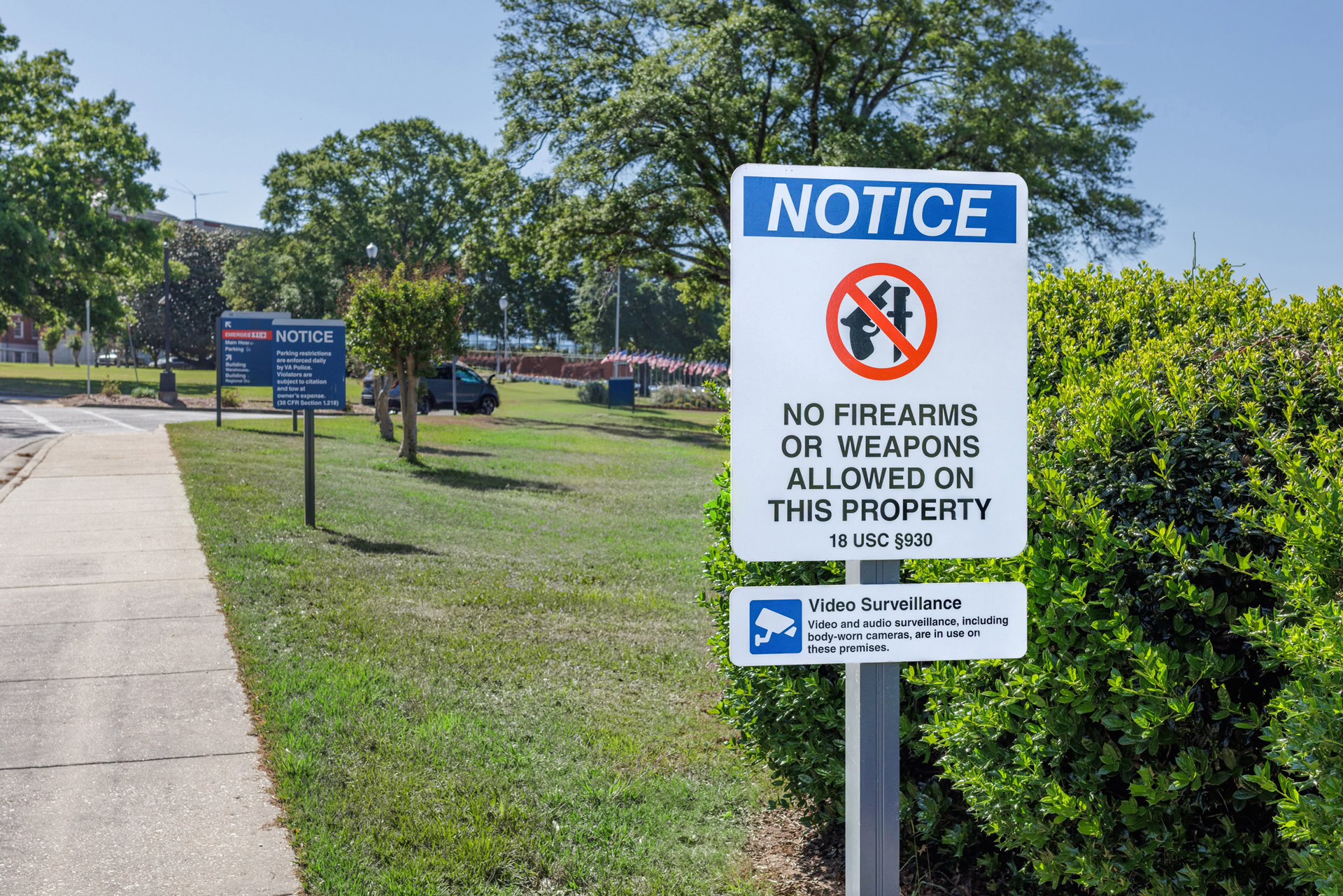
Per VA Signage Design Manual §3.3, the following must be present at primary patient entrances, in sequence. Secondary public entrances only require a condensed subset of policy postings.
Click the sign codes displayed below to open corresponding pages in the Manual.
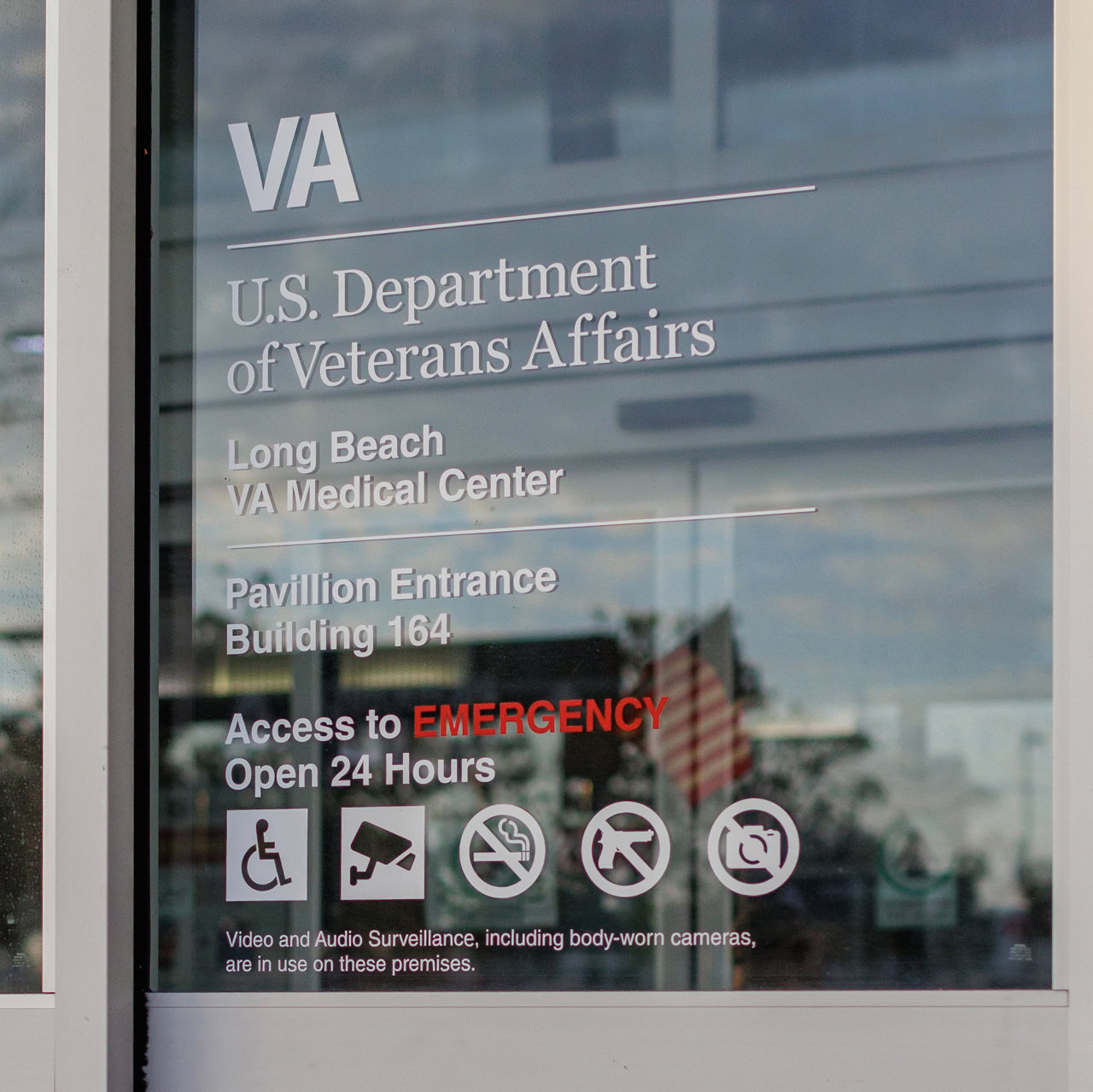
At the Door
Entry Hours + Notices
Required at every public entrance to post hours of operation, regulatory icons, and video surveillance information- IN-02.04.01 Preferred vinyl glass-mount option
- IN-02.04.02 Wall-mount alternate
- EN-14 Optionally installed above the glass-mount sign adding the VA logo, facility name, building / entrance identification, and after-hours access guidance (if applicable)
Inside — Main Entrance Lobby
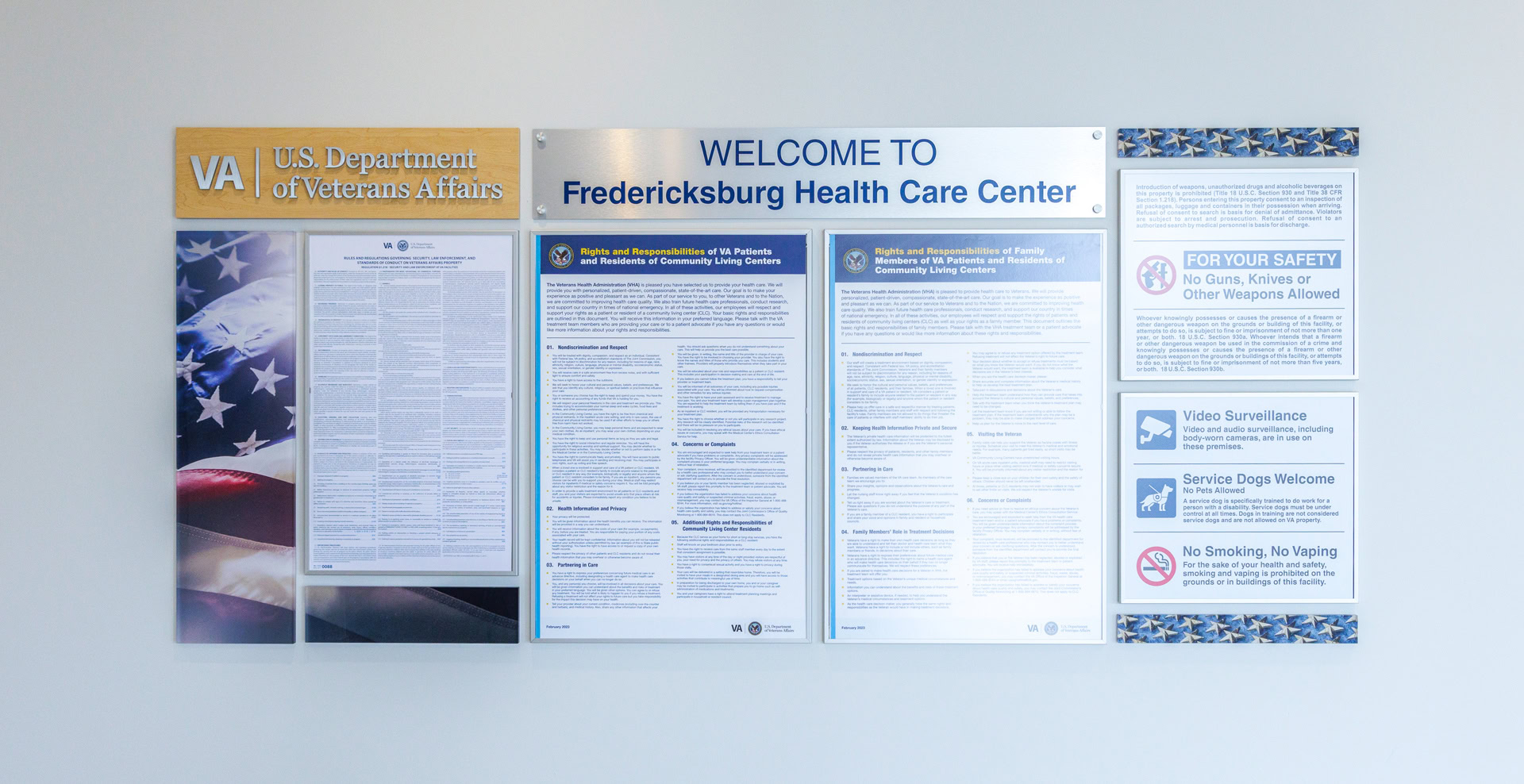
A. Poster 1
- Notice of Policies & Directives – VA Form 0088 (IN-02.07.03)
B. Poster 2
- Rights & Responsibilities of VA Patients (IN-02.07.01)
C. Poster 3
- Rights & Responsibilities of Family Members (IN-02.07.02)
- Notice of Policies & Directives – VA Form 0088 (IN-02.07.03)
Policy Wall Components
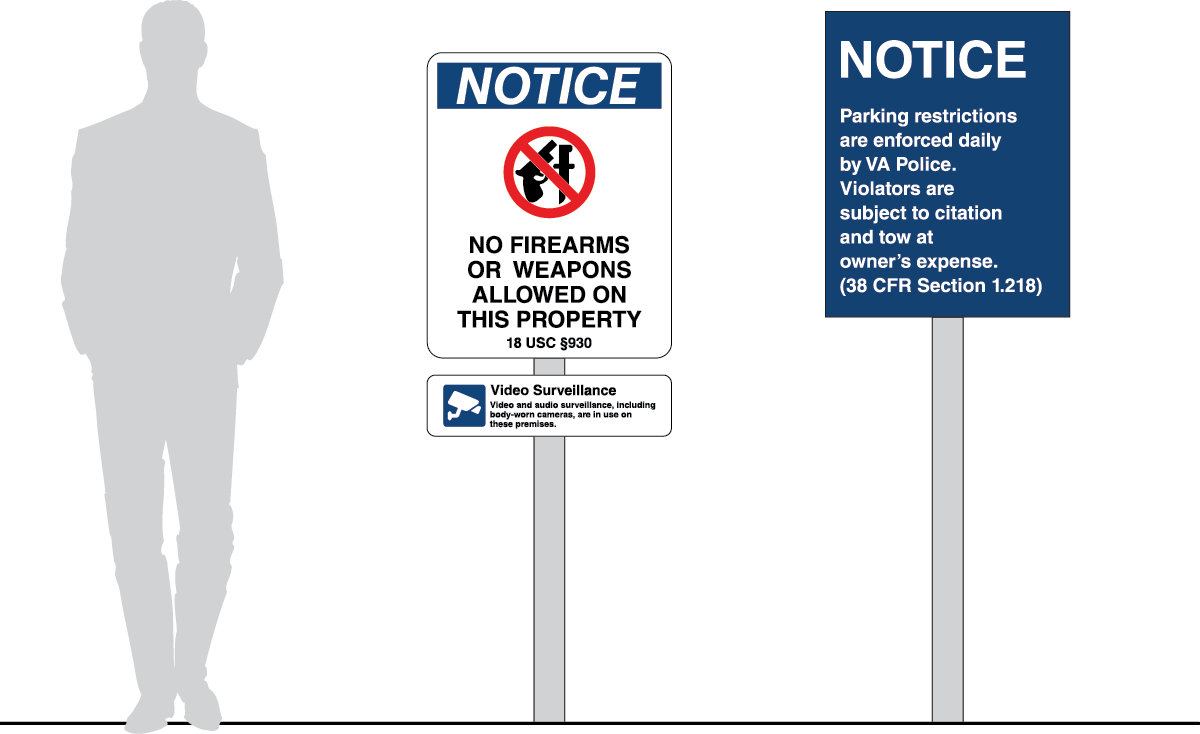
Displaying mandatory policy signage in a clean mosaic layout helps prevent visual clutter at the point of entry while presenting a more polished, organized experience for patients and visitors. Easily updatable frames help keep postings current, consistent, and compliant.
Wayfinding Considerations
Compliance is the baseline — not the finish line.
Ask these questions to identify friction in your arrival experience:
Can a first-time visitor choose the correct campus entrance without guessing?
Campus entrances should be named, visible, and consistent with maps, appointment instructions, and on-site signage. If visitors enter at the wrong point, the rest of the journey starts with unnecessary stress.Does parking guidance direct visitors to the correct lot for their destination — clearly and early?
Parking should be tied to real destinations, not just lot names. Visitors heading to Primary Care, the ED, or the main hospital should receive clear cues before they are forced to make a turn.Are drop-off zones easy to find and clearly labeled from the approach?
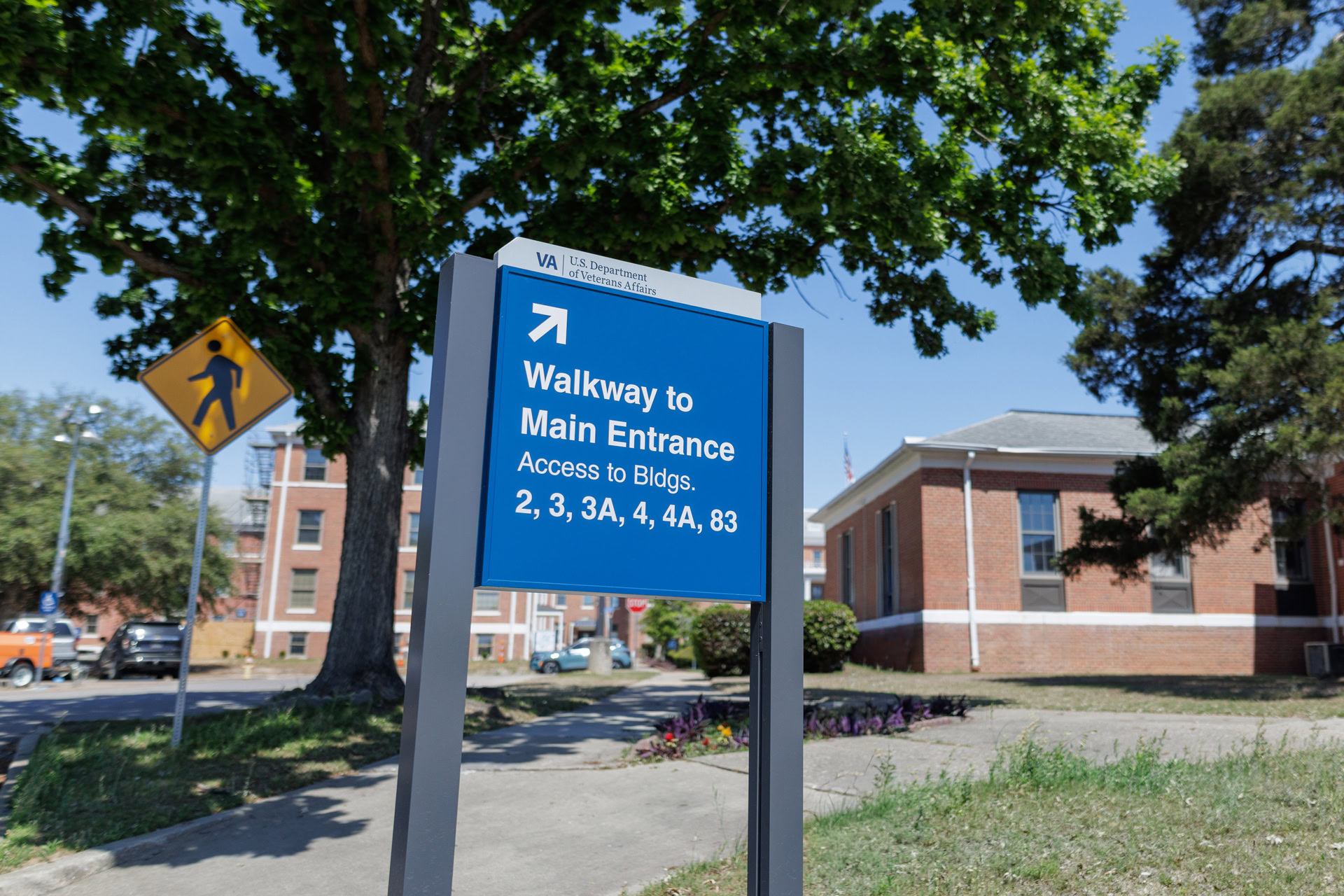
Drop-off areas need to work for both drivers and patients on foot. Clear identification helps reduce hesitation, traffic conflicts, and confusion at one of the most active points of arrival.From parking, is there a clear pedestrian route to the correct building entrance?
The arrival experience continues after the car is parked. Pedestrian wayfinding should provide a continuous path with reassurance cues at decision points.At the building, is the correct door obvious (building number + entrance identity)?
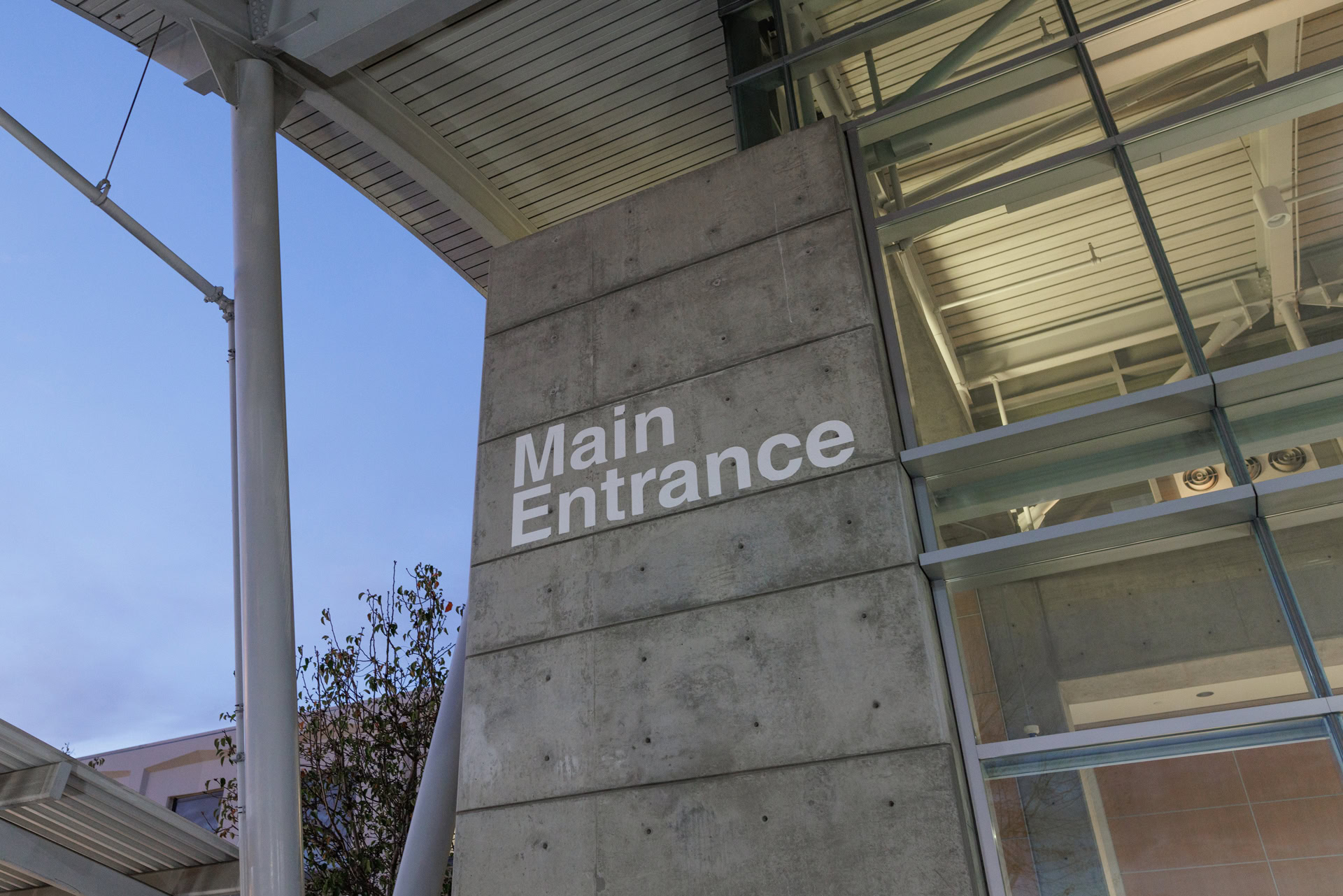
Building identification confirms visitors are in the right place; entrance identification confirms they are using the right door. Both are especially important when a building has multiple public entrances, different hours, or destination-specific access.
A Better Arrival, By Design
Creative has a deep understanding of 2023 VASDM requirements and how they translate into real-world conditions. Request an Arrival Zone Review to pinpoint gaps and prioritize solutions — and note that many of our pre-designed arrival zone solutions are scoped to meet the federal micro-purchase threshold.